Reading library

Isaac Asimov

Petrovichi, c. 2 Jan. 1920 · New York, 6 Apr. 1992

A biochemist by training and a tireless explainer, he wrote or edited more than five hundred books. His robots, his Galactic Empire and the psychohistory of Foundation form a single future history, which he tied together himself late in life.

Fifty years of publications

  • Read
  • Reading
  • To read
  • Not sorted yet
  • Favorite

Above the axis, books by Isaac Asimov. Below, the sequels written by others. Tap a dot to jump to the book.

The Foundation series

Isaac Asimov, 1951–1993

1951

Foundation series · 1

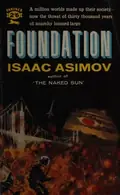
Foundation

Isaac Asimov

Using psychohistory, the mathematician Hari Seldon foresees the fall of the Galactic Empire and thirty thousand years of barbarism. At the edge of the Galaxy he founds a colony of scholars meant to cut that dark age to a thousand years.
1952

Foundation series · 2

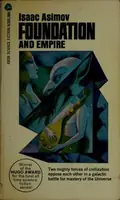
Foundation and Empire

Isaac Asimov

The Foundation faces a last general of the Empire, then the Mule, a mutant able to shape emotions, whom the Seldon Plan did not foresee.

1953

Foundation series · 3

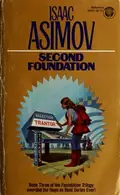
Second Foundation

Isaac Asimov

The Mule, then the Foundation itself, hunt for the mysterious Second Foundation, hidden guardian of the Plan, “at the other end of the Galaxy”.

1982

Foundation series · 4

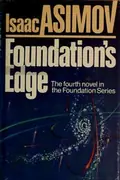
Foundation’s Edge

Isaac Asimov

Thirty years later Asimov returns to the series: councilman Golan Trevize, convinced that the Seldon Plan is too perfect to be true, sets out to find Earth. Hugo Award.

1986

Foundation series · 5

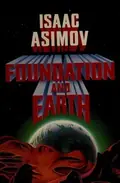
Foundation and Earth

Isaac Asimov

Trevize continues his search for Earth, the forgotten planet of origin, and discovers who has been guiding humanity for twenty thousand years.
1988

Foundation series · 6

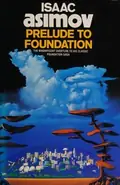
Prelude to Foundation

Isaac Asimov

Young Hari Seldon arrives on Trantor with a theory he believes is unusable. Hunted by the Emperor and his rivals, he discovers the capital and the first steps of psychohistory.

1993

Foundation series · 7

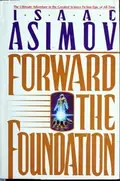
Forward the Foundation

Isaac Asimov

Published after his death: Seldon grows old, loses his loved ones one by one and, against the ruin of the Empire, sets up the two Foundations.

The Robots

Stories and novels, 1950–1986

Elijah Baley

1954

Elijah Baley · 1

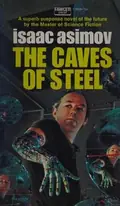
The Caves of Steel

Isaac Asimov

On an overcrowded Earth where humanity lives under domes, detective Elijah Baley, who distrusts robots, must team up with one, R. Daneel Olivaw. A true science fiction detective novel.

1957

Elijah Baley · 2

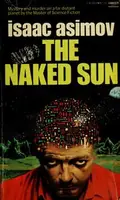
The Naked Sun

Isaac Asimov

Baley investigates a murder on Solaria, where a few thousand humans live apart, served by millions of robots, and can no longer bear to meet in person.

1983

Elijah Baley · 3

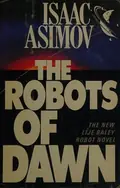
The Robots of Dawn

Isaac Asimov

On Aurora, a Spacer world, a humanoid robot has been “killed”. Baley must solve a “roboticide” on which the future of Earth depends.

1985

Elijah Baley · 4

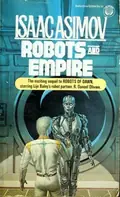
Robots and Empire

Isaac Asimov

Two centuries after Baley, his robots Daneel and Giskard devise the Zeroth Law and make a choice that ties the Robots to the Empire and to Foundation.

Robot stories

1950

Robot stories · Collection

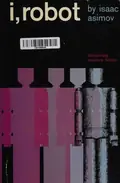
I, Robot

Isaac Asimov

Nine stories linked by robopsychologist Susan Calvin, in which the Three Laws of Robotics are put to the test, from a robot nursemaid to the Machines that run the world economy.

1964

Robot stories · Collection

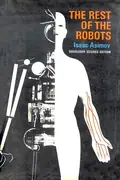
The Rest of the Robots

Isaac Asimov

The other robot stories of the 1940s and 1950s, with Susan Calvin and troubleshooters Powell and Donovan.

1982

Robot stories · Collection

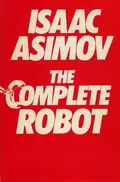
The Complete Robot

Isaac Asimov

Thirty-one stories collected by Asimov himself, including “The Bicentennial Man”.

1986

Robot stories · Collection

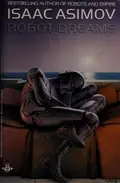
Robot Dreams

Isaac Asimov

A collection of robot stories and other pieces, including the title story, in which a robot dreams that there are no Three Laws.

The Galactic Empire

Three novels, 1950–1952

1951

Galactic Empire · 1

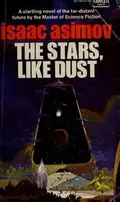
The Stars, Like Dust

Isaac Asimov

A young nobleman whose father was executed by the Tyranni searches for a document that could end their rule over fifty worlds.

1952

Galactic Empire · 2

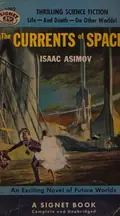
The Currents of Space

Isaac Asimov

On Florina, the only source of a precious fabric, a “spatio-analyst” whose memory has been wiped holds a secret about the planet’s sun.

1950

Galactic Empire · 3

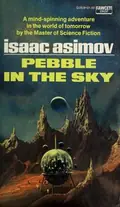
Pebble in the Sky

Isaac Asimov

His first novel: a Chicago tailor is thrown into a distant future where Earth, radioactive and despised, is just a province of the Empire.

The other novels

Isaac Asimov, 1955–1992

1955

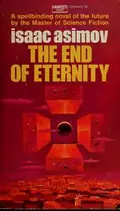
The End of Eternity

Isaac Asimov

Andrew Harlan is an Eternal, a technician outside time who changes reality for the good of humanity. Until he falls in love. Often called his best novel.

1966

Novelization

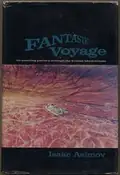
Fantastic Voyage

Isaac Asimov

A submarine and its crew are shrunk and injected into a scientist’s body to destroy a clot in his brain. Asimov wrote the novel from the film’s screenplay.

1972

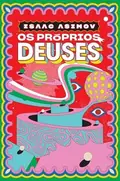
The Gods Themselves

Isaac Asimov

An “Electron Pump” gives Earth free energy, swapped with a parallel universe. The price could be the explosion of the Sun. Hugo and Nebula awards.

1987

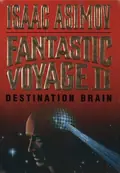
Fantastic Voyage II: Destination Brain

Isaac Asimov

Asimov rewrites Fantastic Voyage his own way, with sounder science: an American neurologist is miniaturized in the Soviet Union.

1989

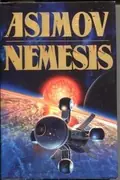
Nemesis

Isaac Asimov

A space colony flees to a nearby star, Nemesis, which is heading towards the solar system. A telepathic teenager discovers unexpected life there.

1990

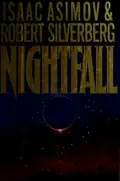
Nightfall

Isaac Asimov and Robert Silverberg

Robert Silverberg expands the famous 1941 story into a novel: on a planet lit by six suns, night falls only once every two thousand years.
1992

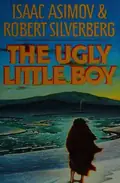
The Ugly Little Boy

Isaac Asimov and Robert Silverberg

A Neanderthal child is brought into the present to be studied. A nurse grows attached to him. A novel based on a 1958 story.

1992

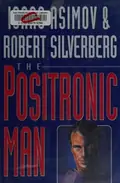
The Positronic Man

Isaac Asimov and Robert Silverberg

The novel based on “The Bicentennial Man”: over two centuries, the robot Andrew Martin seeks to be recognized as a human being.

Lucky Starr

Novels for young readers, as Paul French, 1952–1958

1952

Lucky Starr · 1 · Children’s book

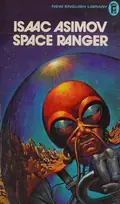
David Starr, Space Ranger

Isaac Asimov (as Paul French)

The first of six novels for young readers published under a pen name: David “Lucky” Starr investigates poisonings linked to the farms of Mars.
1953

Lucky Starr · 2 · Children’s book

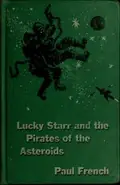
Lucky Starr and the Pirates of the Asteroids

Isaac Asimov (as Paul French)

Lucky goes undercover among the pirates hiding in the asteroid belt.

1954

Lucky Starr · 3 · Children’s book

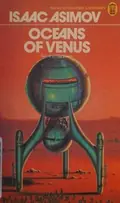
Lucky Starr and the Oceans of Venus

Isaac Asimov (as Paul French)

Under the oceans of Venus, colonists are manipulated by a telepathic creature.

1956

Lucky Starr · 4 · Children’s book

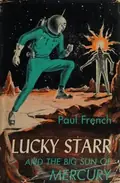
Lucky Starr and the Big Sun of Mercury

Isaac Asimov (as Paul French)

A scientific project is sabotaged on Mercury, the planet closest to the Sun.

1957

Lucky Starr · 5 · Children’s book

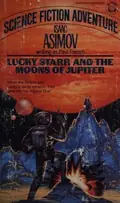
Lucky Starr and the Moons of Jupiter

Isaac Asimov (as Paul French)

A Sirian spy is hidden among the researchers on a moon of Jupiter. The Three Laws of Robotics enter the series.
1958

Lucky Starr · 6 · Children’s book

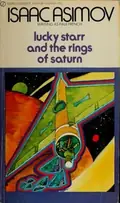
Lucky Starr and the Rings of Saturn

Isaac Asimov (as Paul French)

Lucky chases an enemy agent into the rings of Saturn, where Sirius wants a foothold.
Stories and memoirs

Collections, mysteries and autobiography

1955

Collection

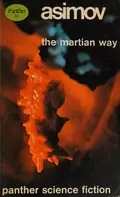
The Martian Way and Other Stories

Isaac Asimov

Four long stories, including “The Martian Way”, in which Martian colonists fetch water from the rings of Saturn.

1957

Collection

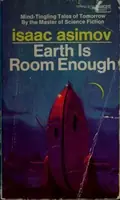
Earth Is Room Enough

Isaac Asimov

Science fiction and fantasy stories, several of them with the computer Multivac.

1959

Collection

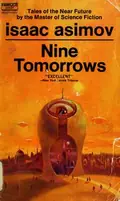
Nine Tomorrows

Isaac Asimov

Nine stories, including “The Last Question”, which Asimov considered his best, and “Profession”.

1969

Collection

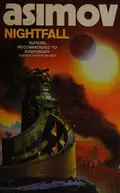
Nightfall and Other Stories

Isaac Asimov

Twenty stories, including “Nightfall” (1941), often voted the best science fiction story of all time.

1974

Mysteries

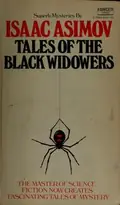
Tales of the Black Widowers

Isaac Asimov

The first Black Widowers collection: six friends dine every month and tackle a puzzle that only their waiter, Henry, ends up solving.

1976

Collection

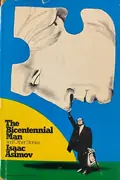
The Bicentennial Man and Other Stories

Isaac Asimov

Stories from the 1970s, including “The Bicentennial Man”, winner of the Hugo and Nebula awards.

1988

Collection

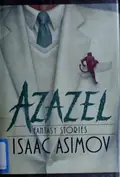
Azazel

Isaac Asimov

The humorous tales of George and his two-centimetre demon, who grants wishes all wrong.

1994

Autobiography

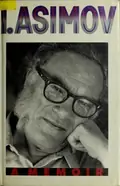
I, Asimov

Isaac Asimov

His memoirs, written in his last years and published after his death: childhood in Brooklyn, chemistry, science fiction and his friends.

After Asimov

Sequels written by other authors

Second Foundation Trilogy

1997

Second Foundation Trilogy · 1

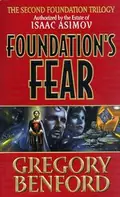
Foundation’s Fear

Gregory Benford

Gregory Benford picks up Hari Seldon just as he is offered the post of First Minister of the Empire.

1998

Second Foundation Trilogy · 2

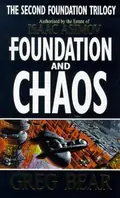
Foundation and Chaos

Greg Bear

Greg Bear tells of Seldon’s trial, seen by Daneel Olivaw and the robots who secretly guide the Empire.

1999

Second Foundation Trilogy · 3

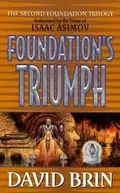
Foundation’s Triumph

David Brin

David Brin closes the trilogy with a dying Seldon, who discovers how much was done behind his back.

Caliban trilogy

1993

Caliban trilogy · 1

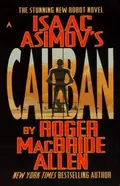
Isaac Asimov’s Caliban

Roger MacBride Allen

With Asimov’s blessing, Roger MacBride Allen imagines a robot without the Three Laws, accused of attacking a scientist on Inferno.

1994

Caliban trilogy · 2

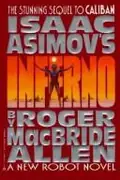
Isaac Asimov’s Inferno

Roger MacBride Allen

Inferno’s “New Law” robots are caught up in a political murder.

1996

Caliban trilogy · 3

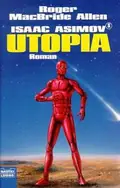
Isaac Asimov’s Utopia

Roger MacBride Allen

The terraforming of Inferno nears its end, and with it the fate of the robots who do not obey the Three Laws.

Films and TV series

Adaptations, since 1966

1966

Film · After Fantastic Voyage

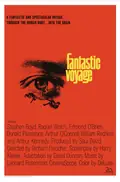
Fantastic Voyage

Richard Fleischer

Richard Fleischer’s film with Raquel Welch, which Asimov novelized. Oscars for visual effects and art direction.

1999

Film · After The Positronic Man

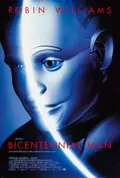
Bicentennial Man

Chris Columbus

Robin Williams plays Andrew, the robot who wants to become human, based on the story and the novel The Positronic Man.

2004

Film · After I, Robot

I, Robot

Alex Proyas

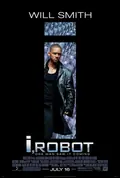
An action film with Will Smith, loosely inspired by the stories: it takes the Three Laws, Susan Calvin and U.S. Robots from them.

2021

TV series · After Foundation

Foundation

David S. Goyer and Josh Friedman

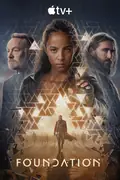
Apple TV+’s very free series, which adds clone emperors and a digital Seldon. It goes beyond the first novel.